Te Whāriki-aware, not checklist-driven
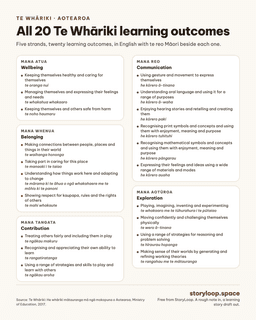
StoryLoop treats Mana atua, Mana whenua, Mana tangata, Mana reo, and Mana aotūroa as strands, then links to relevant learning outcome ideas with a short explanation of why the observation fits.
Aotearoa New Zealand
StoryLoop helps kaiako turn real observations into editable learning story drafts that connect naturally with Te Whāriki, learning dispositions, whānau connection, and responding.
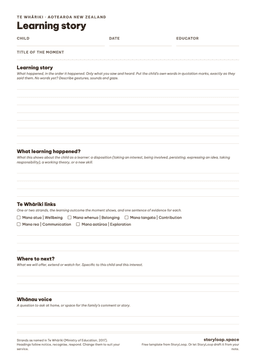
Start with what actually happened: one action, quote, attempt, change, or question. A polished observation is never required.
StoryLoop drafts and checks. The educator reviews, edits, decides what is true, and chooses whether anything is shared.
What StoryLoop does with a note
A real note an educator typed, and the start of the draft StoryLoop wrote from it, unedited, with the Te Whāriki links, learning and next steps to follow.
Aroha tried to put her shoes on before going outside. Velcro kept folding over. Asked 'help me' then pushed my hand away and did the second one herself. Stood up and stomped both feet.
Putting on her own shoes
Before going outside, Aroha tried to put her shoes on by herself. The Velcro kept folding over, making the job trickier. Aroha asked, "help me", letting us know clearly that she needed support.
When help was offered, Aroha pushed the adult hand away and did the second shoe herself. Once both shoes were on, she stood up and stomped both feet. This looked like Aroha checking that her shoes were on and feeling the result with her whole body.
Type what you saw today. StoryLoop writes the draft here, with Te Whāriki links, and shows you exactly what it is built on. Use first names only: demo notes are not saved to any account and are never used to train AI.
No signup for your first try. Use a first name or initial only.
Your draft appears here, with Te Whāriki links that only claim what your note shows, usually in under a minute.
Tip: what the child did, one thing they said, and what happened next. Three lines is plenty.
Want to keep it? Start free: 3 stories a month, no card. You check every word before anything is shared.
StoryLoop treats Mana atua, Mana whenua, Mana tangata, Mana reo, and Mana aotūroa as strands, then links to relevant learning outcome ideas with a short explanation of why the observation fits.
Use a voice note after outdoor play, type quick bullets during rest time, or paste rough notes from your planning book. The result is a first draft that still needs educator review.
Kōwhiti Whakapae and Tapasā references are optional and only appear when relevant, so stories stay thoughtful rather than tokenistic.
FAQ
Yes. Choose New Zealand mode to draft with Te Whāriki strands, learning outcomes, dispositions, child voice, and next steps.
Yes. You can choose low, medium, or high te reo Māori support. StoryLoop keeps it natural and avoids random phrases.
No. StoryLoop supports drafting and structure, while educators remain responsible for observation, interpretation, reflection, final editing, and sign-off.
Yes. Stories are editable after generation and saved in history, so educators can add context, adjust wording, copy, export, or regenerate from the original observation.
StoryLoop is designed to avoid generic, poetic AI wording. It asks for real observations, keeps claims evidence-based, and links curriculum only when the observation supports it.
The free plan includes 3 learning stories per month. Upgrade prompts are dismissible, and existing history remains available even if the free limit is reached.