Guide for educators
What is a learning story?
A learning story is a short written account of something a child did, told as a story, that shows what they were learning and what could come next. The approach was developed in Aotearoa New Zealand in the 1990s by Margaret Carr and colleagues, and it is now the main way early childhood services in New Zealand assess learning under Te Whāriki. Many Australian services use it alongside the EYLF.
Updated 24 September 2026 · StoryLoop, Ōtautahi Christchurch
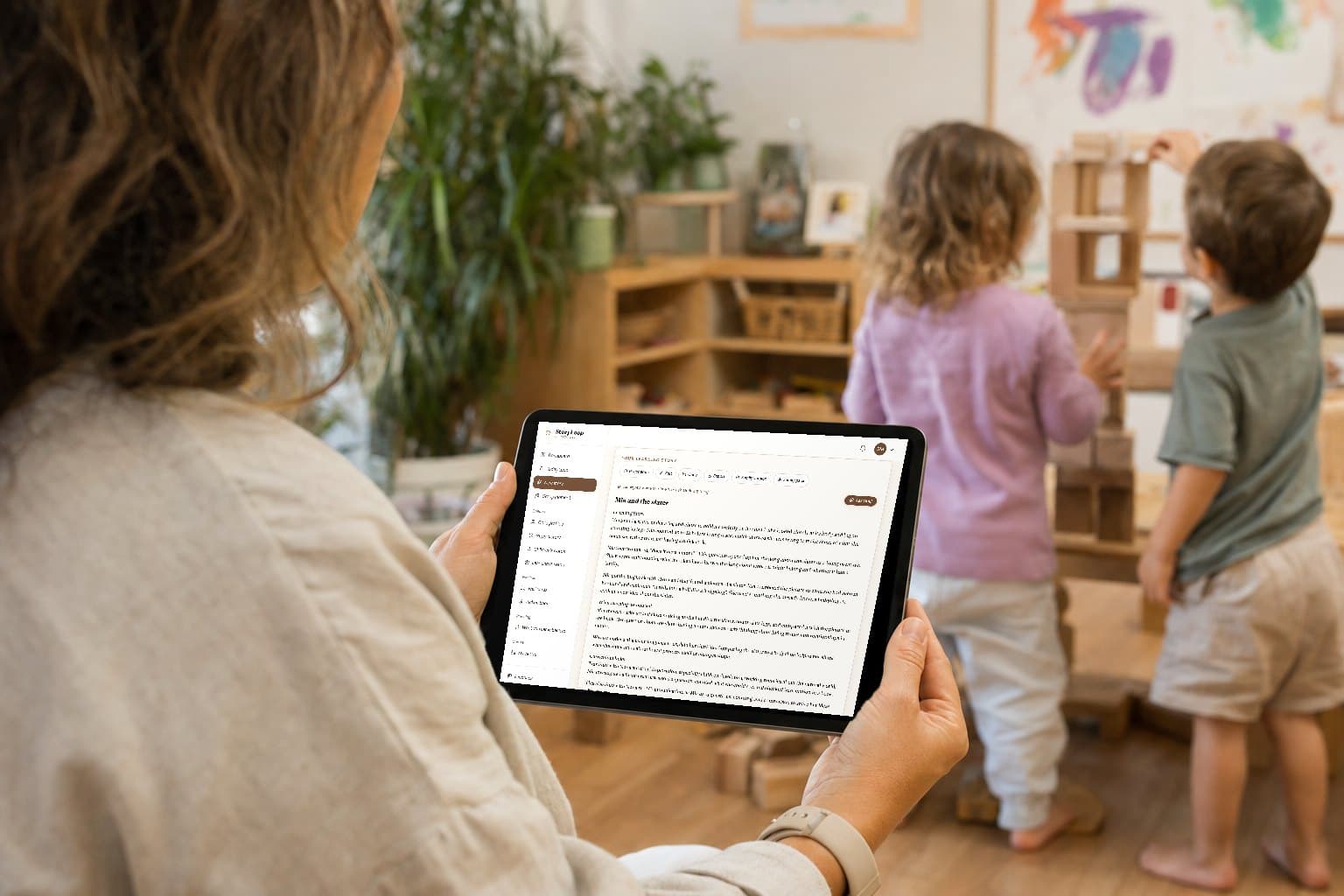
What StoryLoop does with a note
A rough note in, a learning story out.
A real note an educator typed, and the start of the draft StoryLoop wrote from it, unedited, with the Te Whāriki links, learning and next steps to follow.
Aroha tried to put her shoes on before going outside. Velcro kept folding over. Asked 'help me' then pushed my hand away and did the second one herself. Stood up and stomped both feet.
Putting on her own shoes
Before going outside, Aroha tried to put her shoes on by herself. The Velcro kept folding over, making the job trickier. Aroha asked, "help me", letting us know clearly that she needed support.
When help was offered, Aroha pushed the adult hand away and did the second shoe herself. Once both shoes were on, she stood up and stomped both feet. This looked like Aroha checking that her shoes were on and feeling the result with her whole body.
Now try it with your own note. No signup.
Type what you saw today. StoryLoop writes the draft here, with Te Whāriki or EYLF V2.0 links, and shows you exactly what it is built on.
No signup for your first try. Use a first name or initial only.
Your draft appears here, with curriculum links that only claim what your note shows, usually in under a minute.
Tip: what the child did, one thing they said, and what happened next. Three lines is plenty.
Want to keep it? Start free: 3 stories a month, no card. You check every word before anything is shared.
The shape of every story
Notice, recognise, respond
New Zealand's assessment exemplars, Kei Tua o te Pae, describe assessment as three steps, and a learning story follows them in order:
- 1
Notice
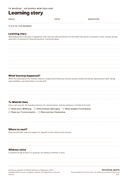
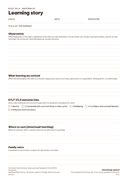
The story. What happened, in the order it happened, with the child's own words if they had any. Only what the educator saw or heard.
- 2
Recognise
The learning. What this shows about the child as a learner: a disposition such as persistence or curiosity, a working theory, a new skill, and the curriculum links it supports.
- 3
Respond
Where to next. What educators will offer, extend or watch for, and a question or idea for the family.
Many stories add the family's voice (a comment or a story from home) and the child's own view, which is why they work so well for families: they read as a story about their child, not a report.
Want the three parts on paper? A blank A4 template, free to print:
A real example
From a two-line note to a story
A note written the way educators jot at the easel (one of the 24 notes StoryLoop is tested on), and the draft StoryLoop wrote from it, unedited. The child's word “green!” is kept exactly as the note has it.
The note (2 to 3 years, EYLF)
zara at the easel mixing blue and yellow with her fingers. said green! when it changed. covered the whole page then did her hands. showed Mia her hands.
Notice: the story
Zara was at the easel using her fingers to mix blue and yellow paint. As the colours changed, Zara noticed what was happening and said, “green!”
She then covered the whole page with paint and moved the paint onto her hands as well. Zara used her hands as part of the painting process, not just the brush or page. After painting her hands, she showed Mia.
Recognise: the learning
Zara was testing what happens when two colours come together. She noticed the change and used a clear word to name it. This showed early thinking about colour mixing and cause and effect.
Zara also used her whole hand to explore the paint. She seemed comfortable using touch to find out what the paint could do on the paper and on her skin. Showing Mia her hands was a social moment too. Zara shared what she had made and drew another child’s attention to her discovery.
Recognise: curriculum links
EYLF Outcome 4: Children are confident and involved learners. Zara used her fingers to mix the paint, noticed the change, and kept adding paint across the page and onto her hands.
EYLF Outcome 5: Children are effective communicators. Zara used the word “green” to name what she saw, then showed Mia her painted hands to share the experience.
Respond: where to next
We can keep offering safe finger painting and colour mixing experiences for Zara. We can place two colours side by side and give her time to mix, notice, and name what changes.
We can also support her language by using simple words during painting, such as mix, more, blue, yellow, green, wet, hand, and page. We will continue to notice whether Zara watches the colour change, names other colours, or shares her discoveries with peers again.
From StoryLoop's accuracy test run of 23 September 2026. Read 11 more.
Common question
Learning story or observation?
An observation records what happened. A learning story does that too, and then says what it means for the child's learning and what comes next. Most services use both: quick observations through the week, and learning stories for the moments that matter.
| Learning story | Observation | |
|---|---|---|
| What it records | What a child did, and why it matters for their learning | What a child did |
| Written as | A short story, often to the child, in everyday language | Notes, a running record, a checklist or a jotting |
| Includes the learning | Yes: the learning noticed, and curriculum links | Sometimes, usually added later |
| Looks forward | Yes: where to next, and how educators will respond | Rarely |
| Who it is for | The child, their family and the teaching team | Mostly the educator |
| Time it takes | 20 to 40 minutes from a blank page; 5 to 10 from a note taken at the time | A few minutes |
Where they came from
Margaret Carr's five learning dispositions
Carr's research, published in Assessment in Early Childhood Settings: Learning Stories (2001), looked for learning dispositions rather than checklists of skills, and tied each to a strand of Te Whāriki:
- Taking an interestBelonging | Mana whenua
- Being involvedWellbeing | Mana atua
- Persisting with difficulty or uncertaintyExploration | Mana aotūroa
- Expressing an idea or a feelingCommunication | Mana reo
- Taking responsibilityContribution | Mana tangata
That is why a good learning story talks about the child as a learner (curious, persistent, thoughtful) rather than ticking off what they can do.
Writing them
Why they take so long, and how to write them faster
A careful learning story takes most educators 20 to 40 minutes from a blank page, and non-contact time rarely covers it, so many are written at home in the evening. The slow part is rarely the noticing; it is turning quick notes into connected paragraphs with the curriculum links and next steps.
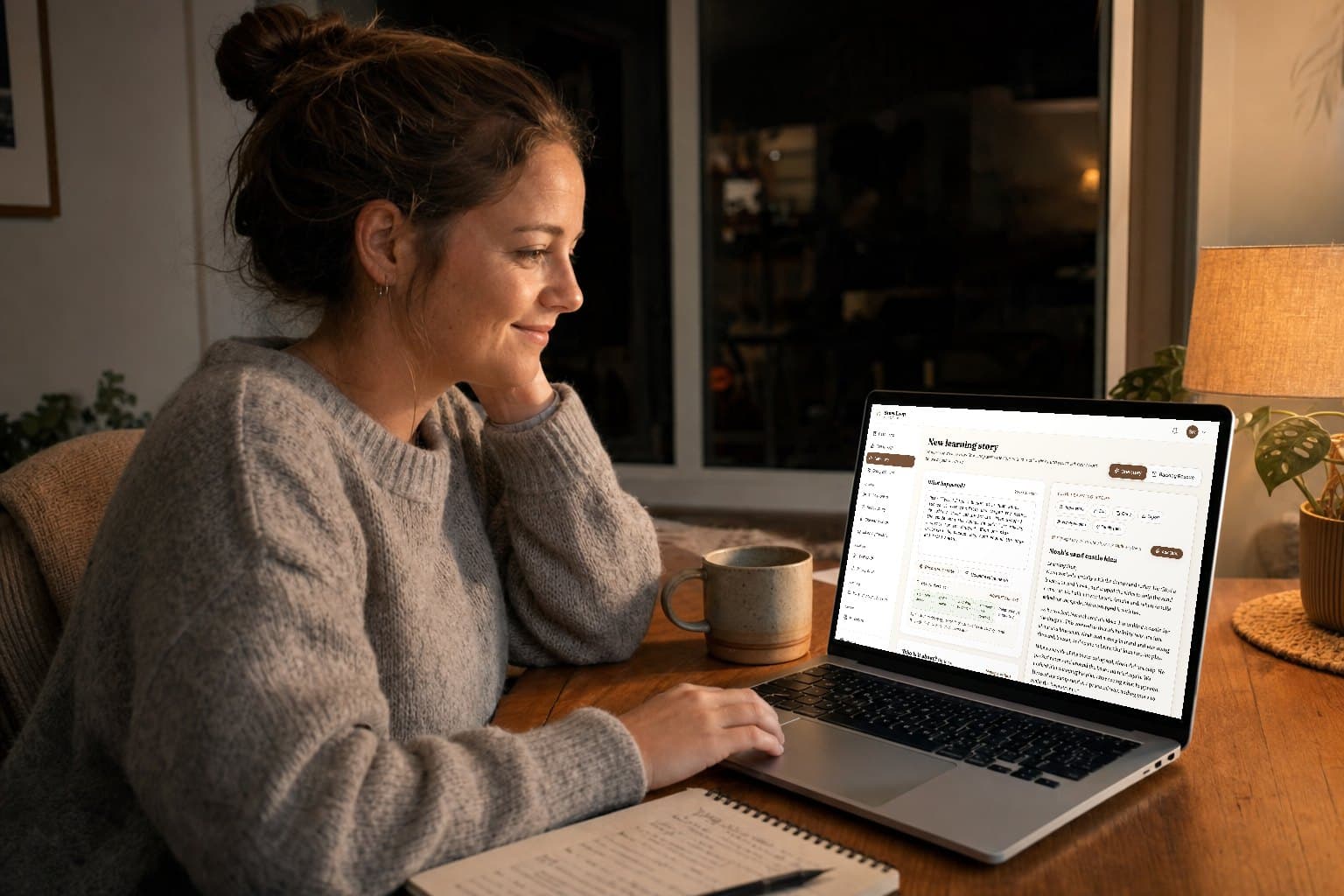
Three habits help whether or not you use a tool: jot the child's exact words at the time, write the story part straight after the moment while it is fresh, and keep the curriculum links to the one or two the moment actually shows. Our free template follows that order.
Questions educators ask
Are learning stories compulsory in New Zealand?
Do Australian services use learning stories?
How long should a learning story be?
Who is a learning story written to?
Can AI write a learning story?
Try it on your own note
- Free forever: 3 stories a month, no card.
- Educator: unlimited stories, NZ$21 or A$19 a month, after a 7-day free trial.
- Educator Pro: NZ$33 or A$29 a month, with child profiles, family translation and unlimited Quill.
- Centres: one price for the team, from NZ$109 or A$99 a month for 10 educators.