Jottings
A few words in the moment: "Tia, 10:15, lined up 6 cars, counted to 4." Fast and easy to lose. Most useful as the raw material for something fuller later the same day.
Observation and documentation
There is no single required observation method. Most educators use a mix: quick jottings, anecdotal records, running records, learning stories, photos and work samples, checklists, and time or event samples. ACECQA says there is no one way to meet documentation requirements, so pick the method that fits what you are trying to understand, and write what you saw before what you think it means.
Start with what actually happened: one action, quote, attempt, change, or question. A polished observation is never required.
StoryLoop drafts and checks. The educator reviews, edits, decides what is true, and chooses whether anything is shared.
Reviewed 29 September 2026 · Written by Leo, who builds StoryLoop, in Ōtautahi Christchurch
What StoryLoop does with a note
A real note an educator typed, and the start of the draft StoryLoop wrote from it, unedited, with the Te Whāriki links, learning and next steps to follow.
Aroha tried to put her shoes on before going outside. Velcro kept folding over. Asked 'help me' then pushed my hand away and did the second one herself. Stood up and stomped both feet.
Putting on her own shoes
Before going outside, Aroha tried to put her shoes on by herself. The Velcro kept folding over, making the job trickier. Aroha asked, "help me", letting us know clearly that she needed support.
When help was offered, Aroha pushed the adult hand away and did the second shoe herself. Once both shoes were on, she stood up and stomped both feet. This looked like Aroha checking that her shoes were on and feeling the result with her whole body.
Type what you saw today. StoryLoop writes the draft here, with Te Whāriki or EYLF V2.0 links, and shows you exactly what it is built on.
No signup for your first try. Use a first name or initial only.
Your draft appears here, with curriculum links that only claim what your note shows, usually in under a minute.
Tip: what the child did, one thing they said, and what happened next. Three lines is plenty.
Want to keep it? Start free: 3 stories a month, no card. You check every word before anything is shared.
A few words in the moment: "Tia, 10:15, lined up 6 cars, counted to 4." Fast and easy to lose. Most useful as the raw material for something fuller later the same day.
A short, factual account of one significant moment, written soon after: who, where, what they did and said. Example: "Leo tried the monkey bars three times, reached the third bar, said 'nearly' and went again."
A continuous, detailed account of everything a child does and says over a set time, often 5 to 10 minutes. Useful when you want to understand a pattern, such as how a child joins play.
A narrative of a meaningful moment, written to the child or family, with what learning you noticed and where to next. It turns an observation into assessment and a plan, in words families read.
A drawing, a construction or a photo of a process, with a line on what the child did and said. Check your service's device policy: in centre-based services ACECQA says images of children should be taken on service devices.
A checklist records whether a skill is seen. A time sample notes what a child is doing at set intervals; an event sample records each time a behaviour happens. Good for questions, not for the whole child.
The most useful observations separate facts from interpretation. Facts are what a child did and said, in order, with their exact words in quotes. Interpretation, what learning you think it shows, comes after and separately. "Ana poured water into three cups and said 'this one's the most'" can be checked by anyone; "Ana understands volume" cannot.
Keeping children's exact words matters. Tidying a two-year-old's speech into a proper sentence changes the evidence. If you are not sure of the words, say so rather than guessing.
Ask what you want to understand. A significant new achievement suits an anecdotal record or a learning story. How a child joins play, or what happens during transitions, suits a running record or an event sample. Whether a skill is emerging across a term suits a simple checklist alongside richer records.
Coverage matters as much as method. Confident, talkative children tend to fill documentation; it is worth checking which children have not been noticed lately and planning to observe them on purpose.
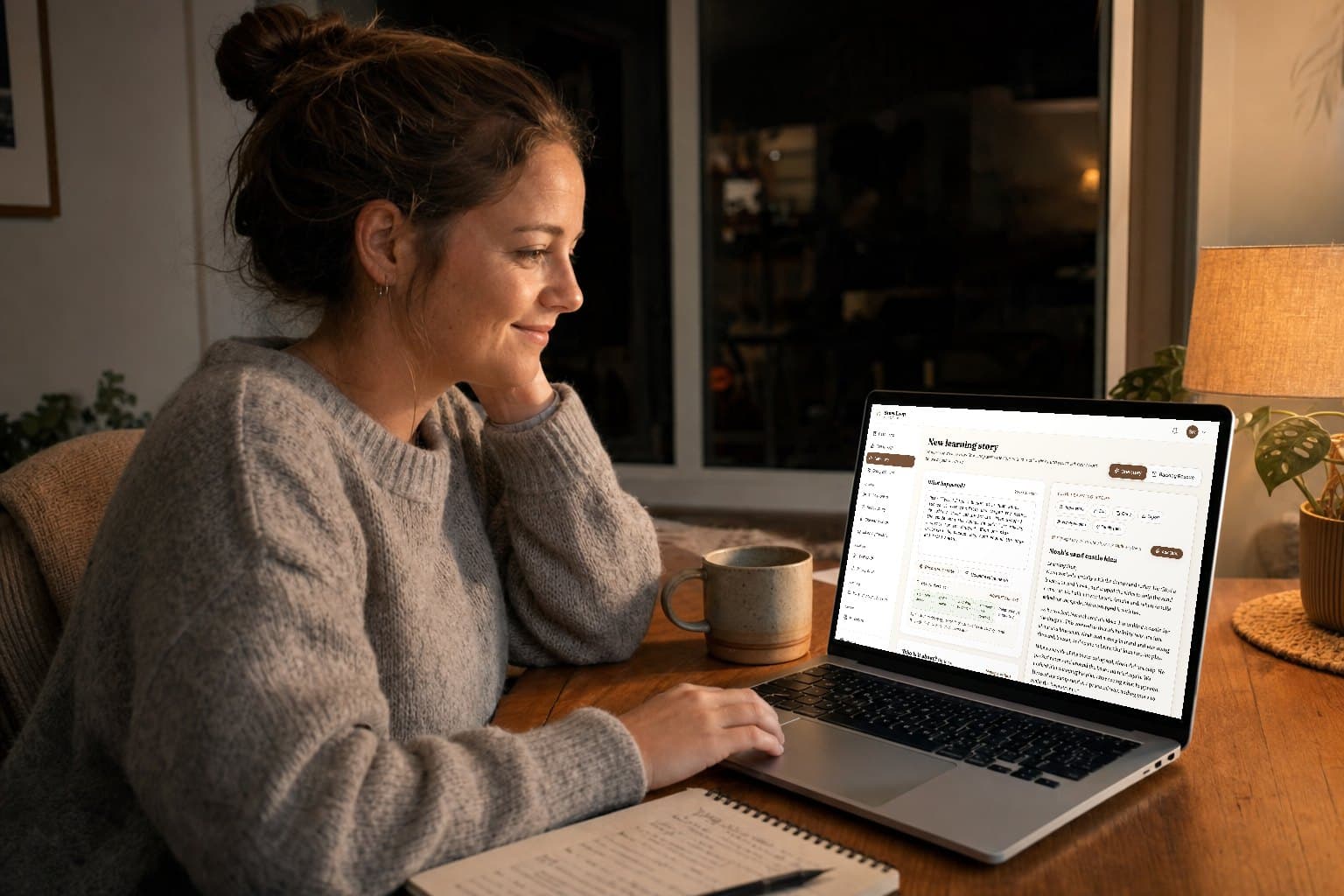
A jotting or anecdotal record often becomes a learning story later: the facts stay the same, and you add what learning you noticed, a link to Te Whāriki or the EYLF V2.0 where it genuinely fits, and what you will do next. That is the part that takes time at the end of the day, and the part StoryLoop drafts from a quick note, with the child's words checked against what you wrote.
Official references
These sources inform this guide. StoryLoop is independent and does not claim endorsement.
FAQ
The common ones are jottings, anecdotal records, running records, learning stories, photos and work samples, checklists, and time or event samples. Most services use several, chosen for the question they want to answer.
An anecdotal record is a short account of one significant moment, written after it happens. A running record captures everything, continuously, over a set time while you watch.
An anecdotal record states what happened. A learning story tells it as a story, usually to the child or family, and adds what learning you noticed and what you will do next, so it is also assessment and planning.
There is no required number. ACECQA lists a set quota of observations as a misconception; what matters is that documentation shows each child's learning over time and how your program responds.
Describe what the child did and said, in order, before any interpretation: "Sam stacked five blocks, the sixth fell, he said 'too wobbly' and moved the bottom one" rather than "Sam was frustrated but persistent". Interpretation comes after, and separately.