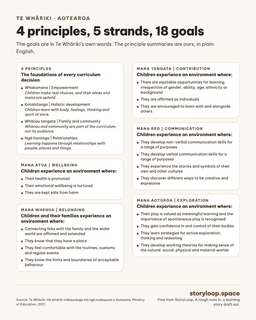
Whakamana | Empowerment. The curriculum empowers the child to learn and grow. In practice that looks like tamariki making real choices, their ideas taken seriously, and their mana upheld: an educator following a child's plan for the block tower rather than replacing it with their own.
Kotahitanga | Holistic development. Children learn with their whole selves: body, feelings, thinking, spirit and relationships at once. A child climbing the frame is also problem solving, managing fear and watching a friend. Learning is seen as connected, not split into separate skills.
Whānau tangata | Family and community. The wider world of whānau and community is part of the curriculum, not an audience for it. What whānau know and hope for their child shapes what happens at the service, and learning connects to home, culture and community.
Ngā hononga | Relationships. Children learn through responsive and reciprocal relationships with people, places and things. The quality of those relationships, with kaiako, other children, the environment and the materials, is where learning happens.