Reflective practice · Australia and Aotearoa

Critical reflection, without the jargon.

Critical reflection is looking closely at your own practice, asking why you do things and who they work for, and changing something as a result. In Australia it is an EYLF V2.0 principle, critical reflection and ongoing professional learning, and NQS element 1.3.2 asks whether it drives your program. In Aotearoa, reflecting on and evaluating practice is how services improve, and it is part of what ERO looks at. The test is simple: did anything change because of it?

Start with what actually happened: one action, quote, attempt, change, or question. A polished observation is never required.

StoryLoop drafts and checks. The educator reviews, edits, decides what is true, and chooses whether anything is shared.

Reviewed 29 September 2026 · Written by Leo, who builds StoryLoop, in Ōtautahi Christchurch

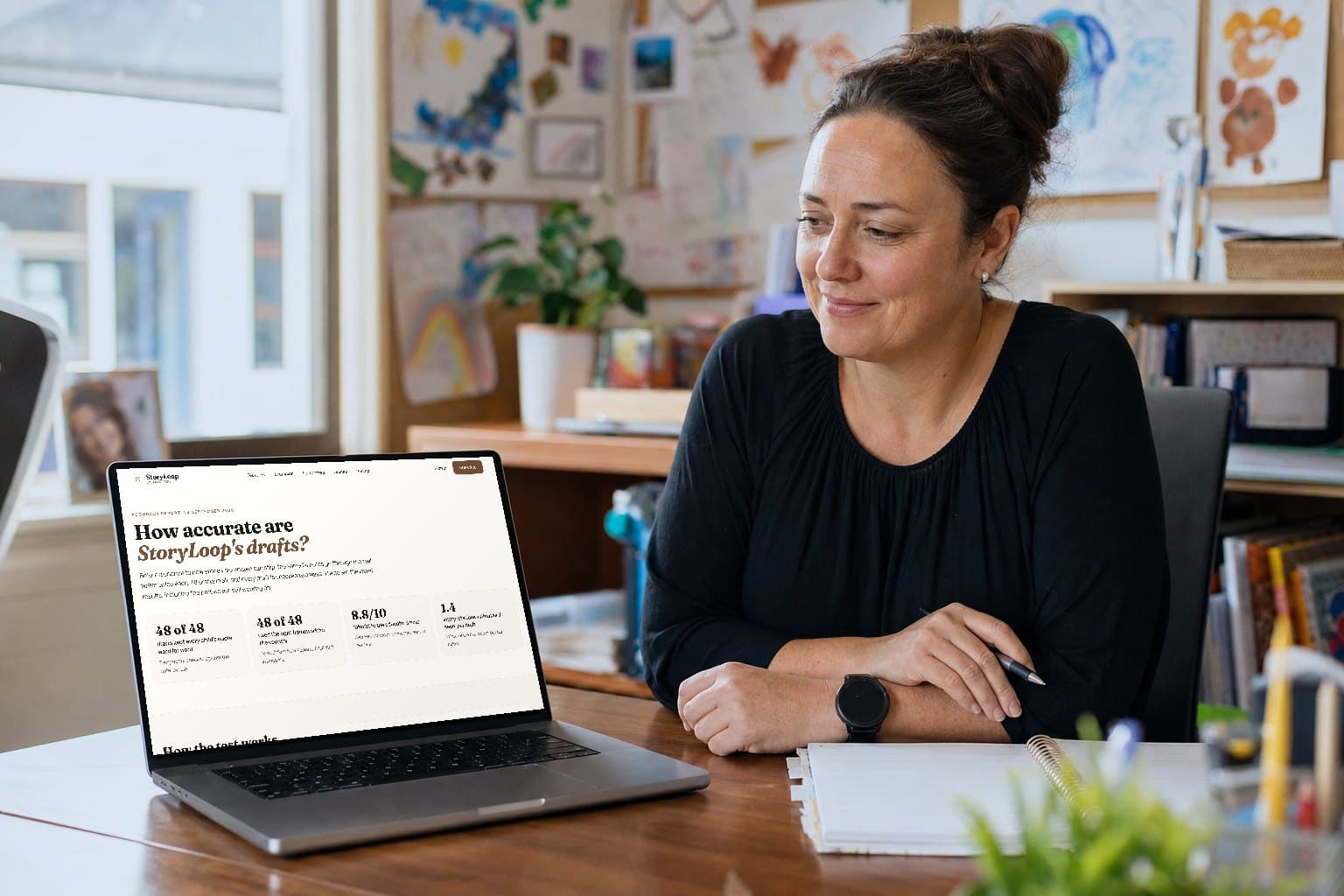
A centre manager at her desk reading a StoryLoop report on a laptop

What StoryLoop does with a note

A rough note in, a learning story out.

A real note an educator typed, and the start of the draft StoryLoop wrote from it, unedited, with the Te Whāriki links, learning and next steps to follow.

The note · Aroha, 2 to 3 years
Aroha tried to put her shoes on before going outside. Velcro kept folding over. Asked 'help me' then pushed my hand away and did the second one herself. Stood up and stomped both feet.
The draft, as StoryLoop wrote it

Putting on her own shoes

Before going outside, Aroha tried to put her shoes on by herself. The Velcro kept folding over, making the job trickier. Aroha asked, "help me", letting us know clearly that she needed support.

When help was offered, Aroha pushed the adult hand away and did the second shoe herself. Once both shoes were on, she stood up and stomped both feet. This looked like Aroha checking that her shoes were on and feeling the result with her whole body.

Read the full draft

Now try it with your own note. No signup.

Type what you saw today. StoryLoop writes the draft here, with Te Whāriki or EYLF V2.0 links, and shows you exactly what it is built on.

No signup for your first try. Use a first name or initial only.

Your draft appears here, with curriculum links that only claim what your note shows, usually in under a minute.

Tip: what the child did, one thing they said, and what happened next. Three lines is plenty.

Want to keep it? Start free: 3 stories a month, no card. You check every word before anything is shared.

Reflection or critical reflection?

Reflection asks what happened and how it went. Critical reflection goes further: what did I assume, whose voice is missing, who does this routine suit, and what would I do differently? It looks at the reasons behind practice, not only the event.

Questions that make it critical

Who benefits from the way we do this, and who does not? What do I believe about this child, and where did that come from? Whose knowledge is missing: the child's, the family's, the culture's? What does the evidence in our documentation actually show?

What it looks like written down

Short and specific beats long and general. One noticing, the question it raised, what you tried, and what happened next. A note made in the moment or a two-minute conversation between educators counts, not only a formal journal entry.

Three short examples

Arrival routine. An educator notices that the same two children cry at drop-off every morning while the room is busy with breakfast. She asks whose needs the routine serves, trials a quieter corner with a familiar adult for the first ten minutes, and records what changed over two weeks. That last step is what makes it critical reflection rather than a diary entry.

Who gets documented. A team looks at a term of learning stories and finds that confident, talkative children appear three times as often as quieter ones. They ask why, agree that busy educators document what is loud, and plan to notice each quieter child deliberately at least once a week.

Photos everywhere. A room's documentation is mostly photos with one-line captions. The team asks what families actually learn from them, and whether the child's own words appear anywhere. They start recording one quote per story, and ask families what they want to know.
A ten-minute template

What did I notice? One specific moment or pattern, in facts. What did I assume, and why? Name the belief behind your first reaction. Whose perspective is missing? The child's, the family's, a colleague's, or a cultural perspective. What will I try? One small, concrete change. What happened? Come back to it within a fortnight and write two lines.

Kept this short, a reflection takes ten minutes and produces something a colleague, a family or an assessor can follow from question to change.

Reflecting as a team

Group reflection works best around real evidence: a few recent stories, a routine that is not working, or a family's comment. Bring the documentation, not only opinions. Agree on one change and who will watch whether it helps, then return to it at the next meeting.

For NQS element 1.3.2, assessors may ask how reflection on individual children and on the group has shaped the program. Short notes that show the thread from noticing to change are more convincing than long entries that end with a feeling.

FAQ

Straight answers for educators.

What is critical reflection in early childhood?+

Thinking deeply about your practice: questioning assumptions, considering different perspectives, including children's and families', and using what you find to change what you do. It is one of the eight EYLF V2.0 principles.

Which NQS element covers critical reflection?+

Element 1.3.2: critical reflection on children's learning and development, both as individuals and in groups, drives program planning and implementation. Assessors may ask how reflection has led to changes.

What is an example of critical reflection?+

An educator notices the same three children fill the documentation while others barely appear. She asks why, finds it is the confident, talkative children, and changes the plan so each quieter child is deliberately noticed at least once a week. The change is what makes it critical reflection.

How often should educators critically reflect?+

There is no set number. What matters is that reflection is ongoing and leads somewhere. Quick notes during the day and short team conversations are valued alongside formal reflections.

Can AI help with critical reflection?+

It can prompt good questions and show patterns, such as which children are rarely documented, but the thinking has to be yours. Reflection an AI wrote for you is not reflection.