Teaching practice · Australia and Aotearoa

Intentional teaching: purposeful, not scripted.

Intentional teaching means being deliberate, purposeful and thoughtful about your decisions and actions, inside children's play as much as in planned experiences. In the EYLF V2.0 it sits within the practice of play-based learning and intentionality. It does not mean adult-led lessons: it means knowing why you step in, how, and when to step back.

Start with what actually happened: one action, quote, attempt, change, or question. A polished observation is never required.

StoryLoop drafts and checks. The educator reviews, edits, decides what is true, and chooses whether anything is shared.

Reviewed 29 September 2026 · Written by Leo, who builds StoryLoop, in Ōtautahi Christchurch

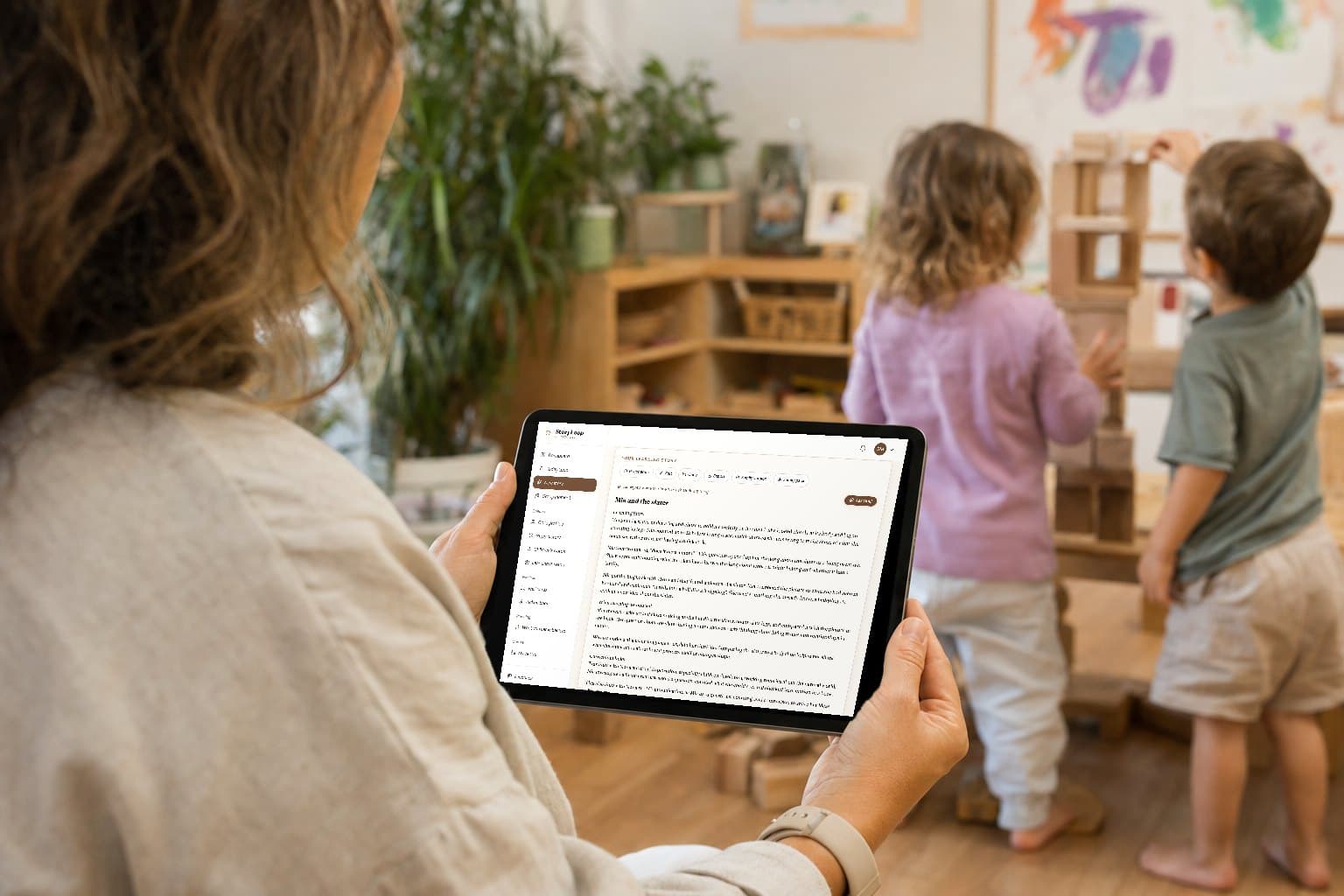
An educator in a centre with a tablet, children building with blocks in the background

What StoryLoop does with a note

A rough note in, a learning story out.

A real note an educator typed, and the start of the draft StoryLoop wrote from it, unedited, with the Te Whāriki links, learning and next steps to follow.

The note · Aroha, 2 to 3 years
Aroha tried to put her shoes on before going outside. Velcro kept folding over. Asked 'help me' then pushed my hand away and did the second one herself. Stood up and stomped both feet.
The draft, as StoryLoop wrote it

Putting on her own shoes

Before going outside, Aroha tried to put her shoes on by herself. The Velcro kept folding over, making the job trickier. Aroha asked, "help me", letting us know clearly that she needed support.

When help was offered, Aroha pushed the adult hand away and did the second shoe herself. Once both shoes were on, she stood up and stomped both feet. This looked like Aroha checking that her shoes were on and feeling the result with her whole body.

Read the full draft

Now try it with your own note. No signup.

Type what you saw today. StoryLoop writes the draft here, with Te Whāriki or EYLF V2.0 links, and shows you exactly what it is built on.

No signup for your first try. Use a first name or initial only.

Your draft appears here, with curriculum links that only claim what your note shows, usually in under a minute.

Tip: what the child did, one thing they said, and what happened next. Three lines is plenty.

Want to keep it? Start free: 3 stories a month, no card. You check every word before anything is shared.

Strategies you already use

Modelling, open questions, thinking aloud, scaffolding a skill just beyond reach, offering a new material, demonstrating, and sustained shared thinking, where you and a child work through an idea together over several turns.

Planned and in the moment

Some intentional teaching is planned from what you noticed last week. Much of it is spontaneous: a child is stuck, and you choose to wait, to ask a question, or to show one step. Both count when you know why you chose it.

How it shows in a learning story

In the responding or where-to-next part: what you did, why, and what happened. "I added a longer plank to see if Mia would test the gap again" says more about intentional teaching than any label.

Examples by age

Babies: an infant reaches for a rattle just out of reach. You wait instead of handing it over, name what they are doing, and move it slightly closer only when they have tried a few times. The waiting is the intentional part.

Toddlers: a toddler keeps filling a bucket that tips over. You offer a scoop and a flatter bucket, and say "Let's see if this one stays up." You are giving them a new way to test the same idea, not solving it for them.

Preschoolers: a group argues about whose tower is tallest. You ask "How could we find out?", bring string and blocks, and let them decide how to measure. Tomorrow you plan a measuring experience because of what you saw today.
Knowing when to step back

Intentionality includes choosing not to act. If children are deep in play and working something out together, interrupting to teach can end the learning you wanted to support. Many experienced educators treat observing first as the default and step in when a child is stuck, unsafe, excluded or ready for a nudge.

Writing down why you stepped in, or why you did not, is one of the clearest ways to show intentional teaching in documentation and in conversations with assessors or reviewers.

From one moment to a plan

Intentional teaching connects to the planning cycle: you notice something, recognise the learning, respond in the moment, and plan what comes next. A learning story's where-to-next section is where that plan is written, and the next story is where you find out whether it worked.

Official references

These sources inform this guide. StoryLoop is independent and does not claim endorsement.

FAQ

Straight answers for educators.

What is intentional teaching in early childhood?+

Educators being deliberate, purposeful and thoughtful in their decisions and actions to support children's learning, whether in planned experiences or in the middle of play.

Is intentional teaching still in the EYLF V2.0?+

Yes. In V2.0 it is part of the practice called play-based learning and intentionality, which joined version 1's separate practices of learning through play and intentional teaching.

What are examples of intentional teaching strategies?+

With a baby, naming what they reach for and waiting for their response. With a toddler, offering a scoop when a bucket keeps tipping. With a four-year-old, asking "How could we find out?" and planning the test together.

What is sustained shared thinking?+

Two or more people working together on an idea, solving a problem or extending a story, where both contribute and the thinking develops over several exchanges. The term comes from research in England led by Iram Siraj-Blatchford.

Does intentional teaching mean less free play?+

No. It is about how educators take part in play, not replacing it. Often the most intentional choice is to observe and not interrupt.